Smart Forests Radio
How are forests becoming digital environments? The Smart Forests research project investigates the social-political impacts of digital technologies that monitor and govern forests. In this podcast series, we speak to scientists, artists, activists, and technologists about their work. Find out more about the Smart Forests project at https://smartforests.net/ and explore the Smart Forests Atlas at https://atlas.smartforests.net/.
Listen on:



Episodes
Nov 29, 2023
Nov 29, 2023
28 min
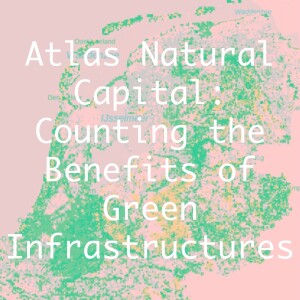
In this Smart Forests Radio episode, we interview Miranda Mesman and Ton de Nijs from the Dutch National Institute for Public Health and the Environment (RIVM). RIVM develops digital platforms like Atlas Natural Capital and Atlas Living Environment to aid green urban planning by quantifying the environmental and societal benefits of greening cities. During the interview, Miranda and Ton share their journey of consolidating maps, building data models, and developing API tools to capture the interdependence of natural capital, the environment, and human health. While digital technologies and data can enable different approaches to modelling urban environments, Miranda and Ton stress that citizen engagement is crucial for realising the benefits of green infrastructures.
Interviewers: Michelle Westerlaken and Jennifer Gabrys
Producer: Harry Murdoch
For more on Atlas Natural Capital, head to Smart Forests Atlas.
Image: Atlas Natuurlijk Kapitaal, https://www.atlasnatuurlijkkapitaal.nl
Nov 15, 2023
Nov 15, 2023
25 min
In this Smart Forests Radio episode, we speak to Professor David Coomes, Director of the University of Cambridge Conservation Research Institute (UCCRI). David uses computational technologies, from lidar to machine-learning algorithms, to estimate differences in carbon storage over time and across vast landscapes in response to environmental changes. Reflecting on his forest ecology research practice as it intersects with digital technologies, he discusses the importance of maintaining traditional field surveys in the world of high-resolution remote-sensing technologies. David also reminds us that, beyond the monetary value associated with the carbon market, forests have multiple other values, including their role in combating climate change, increasing biodiversity, supporting local livelihoods, and more.
Interviewers: Jennifer Gabrys and Trishant Simlai
Producer: Harry Murdoch
Image: Zhenrong Du, Le Yu, Jianyu Yang, David Coomes, Kasturi Kanniah, Haohuan Fu, and Peng Gong, https://ieeexplore.ieee.org/abstract/document/10103610
Nov 1, 2023
Nov 1, 2023
31 min
In this Smart Forests Radio episode, we interview Martha Fellows, a researcher from the Amazon Environmental Research Institute (IPAM) in Brazil. In close collaboration with Indigenous communities, IPAM has developed tools such as the forest monitoring platform SOMAI, which seeks to support Indigenous territories and populations in preserving the Indigenous Amazon. IPAM provides technologies as well as offers training and funds, thereby enabling Indigenous groups to autonomously manage data and systems. This support allows Indigenous communities to create their own plans aligned with their land practices and traditional knowledge, while working to make lasting environmental and political impacts.
Interviewers: Jennifer Gabrys and Danilo Urzedo
Producer: Harry Murdoch
For more on SOMAI, head to Smart Forests Atlas.
Image: SOMAI, https://somai.org.br
Oct 18, 2023
Oct 18, 2023
33 min
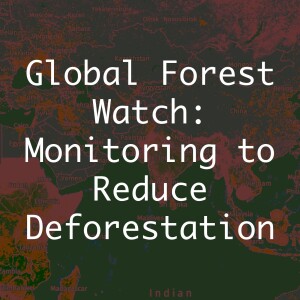
In this Smart Forests Radio episode, we invite Kaitlyn Thayer and Gabrielle Nusbaum from the World Resources Institute (WRI) to speak about Global Forest Watch, an open-source platform for near real-time global forest monitoring. The platform is used by a wide array of different actors, including protected area managers, Indigenous communities, governments, corporations and journalists, to monitor and act on deforestation events. Kaitlyn and Gabrielle discuss how the GFW team continuously develops tools and collaborates with multiple stakeholders to produce credible data. The conversation also touches on the challenges of publishing data amid ongoing political changes.
Interviewers: Yuti Ariani Fatimah and Jennifer Gabrys
Producer: Harry Murdoch
For more on Global Forest Watch, head to the Smart Forests Atlas.
Image: Global Forest Watch, https://www.globalforestwatch.org
Oct 4, 2023
Oct 4, 2023
22 min
In this episode, we speak to Pujita Guha for the Forest Curriculum, a "collectively run itinerant anarchist platform for artistic, curatorial and political research and organisation." Pujita talks about the collaborative process of building a platform for conversations about forests, the nonhuman, and Indigenous knowledges in South and Southeast Asia. Other topics include the risks of digital technologies and data in contexts of state surveillance, and how artistic practices can expand sensory experiences of forest spaces beyond digital calculability.
Interviewers: Kate Lewis Hood and Jennifer Gabrys
Producer: Harry Murdoch
For more on the Forest Curriculum, head to the Smart Forests Atlas.
Image: The Forest Curriculum, https://www.facebook.com/forestcurriculum/
Sep 20, 2023
Sep 20, 2023
24 min
In this radio episode, we speak to Patrick Ribeiro, founder of OpenForests, a technology company that develops digital tools such as the explorer.land platform for forest restoration initiatives. Patrick discusses how digital technologies – from drones to satellites to interactive maps – can facilitate data-led storytelling that builds transparency between on-the-ground restoration projects, stakeholders and investors, and why it is important to take a multidimensional approach to forests' value.
Interviewers: Max Ritts and Trishant Simlai
Producer: Harry Murdoch
Image source: explorer.land, https://explorer.land/x/projects
Sep 6, 2023
Sep 6, 2023
34 min
In this episode, we speak to Brian House, a sound artist and Assistant Professor of Art at Amherst College. Brian discusses Macrophones, an ongoing project that records and processes atmospheric infrasound (sound with a frequency below the range of human hearing) to make it audible for listeners. The conversation touches on the role of art and technology in generating new environmental sensitivities, and how to make the materialities of data infrastructures visible.
Interviewers: Max Ritts and Michelle Westerlaken
Producer: Harry Murdoch
For more on Macrophones, check out the Smart Forests Atlas.
Image: Brian House, Macrophones, https://brianhouse.net/works/macrophones/
Aug 9, 2023
Aug 9, 2023
38 min
In this episode, we speak to Joycelyn Longdon, a PhD researcher on the AI for the study of Environmental Risk programme at the University of Cambridge, and founder of Climate in Colour, an educational platform focused on climate science and social justice.
Joycelyn discusses her interdisciplinary work creating machine learning algorithms and data visualisations of forest sound with a community living by the Bosomtwe Range Forest Reserve in Ghana. She reflects on the importance – and the complexities – of participatory, justice-oriented research to co-create technologies that facilitate community agency and data sovereignty in knowing and managing forests.
This episode also includes audio recordings from the acoustic sensors Joycelyn and the community have installed in the forest. Listen out!
Interviewers: Kate Lewis Hood and Michelle Westerlaken
Producer: Harry Murdoch
Image: Teye, a hunter from the community Joycelyn is working with, installs an acoustic sensor in the forest. Image source: Joycelyn Longdon. Reproduced with permission.

Jul 26, 2023
Jul 26, 2023
41 min
How do fire, forests, and landscape politics intersect? In this Smart Forests Radio episode, we speak with Border Agency, a research and art collective, about their latest exhibition at the Museo de La Solidaridad Salvador Allende in Santiago, Chile.
We discuss the role of eucalyptus plantations in reshaping the Chilean landscape, and consider the power dynamics involved in cultivating forests. We also explore the opaque borders between monocultural and wild landscapes, and look at how collaboration can open up different ways of inhabiting and caring for landscapes.
Founded and directed by Sebastián Melo, Rosario Montero and Paula Salas, Border Agency works internationally with bases in Santiago de Chile and London, UK.
Interviewer: Jennifer Gabrys
Producer: Harry Murdoch.
Visit the Smart Forests Atlas to learn more about our research project.
Image source: Bosques de Fuego (Fire Forest), Border Agency.
Jul 12, 2023
Jul 12, 2023
30 min
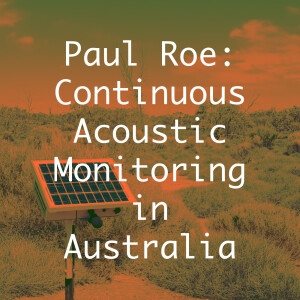
In this episode, we speak to Paul Roe, Professor of Computer Science at Queensland University of Technology. Along with academics from a range of Australian universities, Paul leads the Australian Acoustic Observatory (A2O), a network and infrastructure of acoustic sensors that continuously monitor different ecosystems across the continent. In this conversation, Paul discusses the Observatory's open access data-driven approach, how these data can be used by different stakeholders, for example monitoring particular bird species or studying the effects of bushfires on ecosystems, and the relationship between digital data analysis and immersive ecological observation.
Interviewer: Max Ritts
Producer: Harry Murdoch
Head to the Smart Forests Atlas to find out more about the Australian Acoustic Observatory.
Image source: Australian Acoustic Observatory, https://acousticobservatory.org/blog-2/